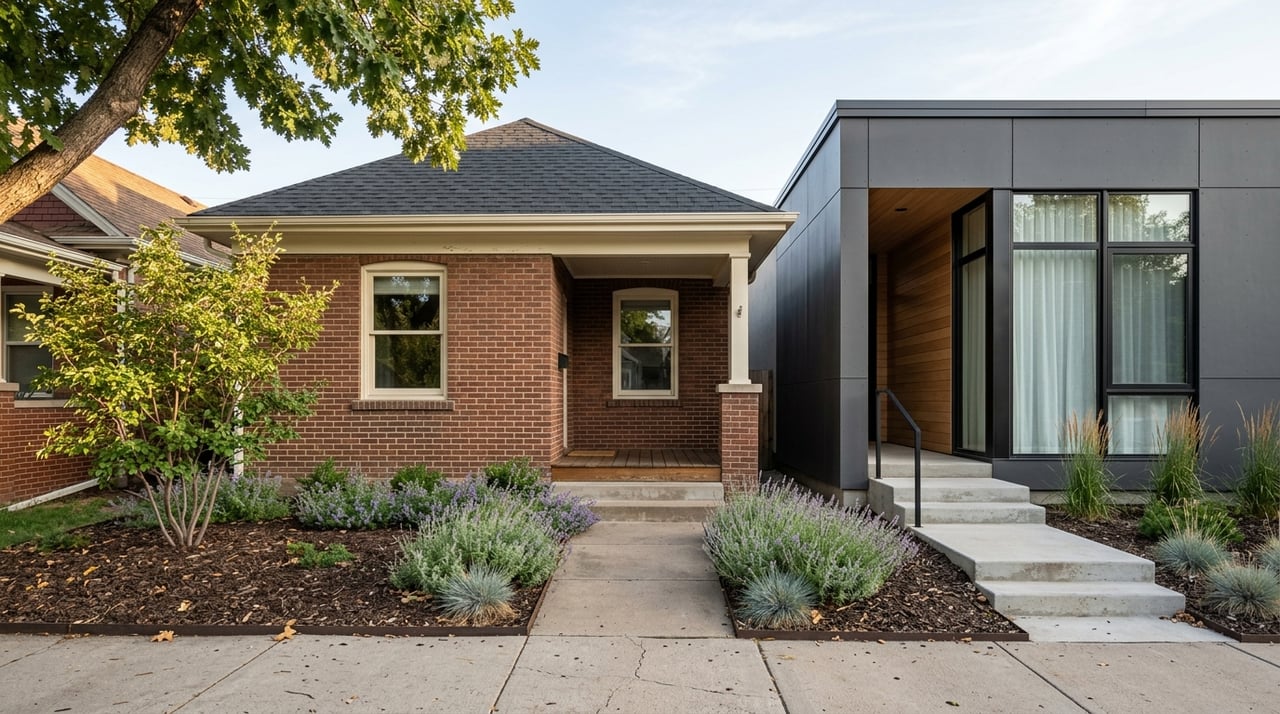
If you have ever walked The Highlands and wondered why one block feels full of historic brick homes while the next leans modern and sleek, you are not imagining it. This part of Denver has a layered architectural story, and that mix is a big part of what draws buyers in. If you are trying to understand what different home styles mean for daily life, upkeep, and long-term fit, this guide will help you read the neighborhood with more clarity. Let’s dive in.
Why The Highlands Feels So Varied
The first thing to know is that The Highlands is not one uniform district. Denver Public Library describes it as “not just one district, but many,” and that helps explain why the architecture can shift so much from one pocket to another.
You will hear overlapping area names like Highland, West Highland, Potter Highlands, Highland Park, Scottish Village, and LoHi. Each pocket developed a little differently, and those differences still show up in the homes, street patterns, and overall feel today.
Potter Highlands is one of the most important historic areas in the broader Highlands story. It developed in two main waves and is known for large square blocks, historic interior carriage lots, and a building stock that is mostly brick masonry.
Highland Park and Scottish Village add another layer. According to Denver Public Library and Denver planning materials, this district stands out for narrow, curving streets and High Victorian architecture, with nearby stretches that include Queen Anne homes and historic duplex rows.
LoHi presents a different side of the market. Visit Denver describes it as a mix of old and ultra-modern architecture, which is one reason buyers often feel that the Highlands changes character block by block.
Victorian Homes in The Highlands
When people talk about historic charm in The Highlands, they are often talking about Victorian-era homes. In practical terms, that usually means Queen Anne and other late-19th-century styles with more ornament, more texture, and more visual personality.
What Victorian architecture looks like
Queen Anne homes are typically asymmetrical, with rooms arranged around a central stair. Denver’s landmark guidelines also associate these homes with features like spindlework, decorative brackets, fish-scale shingles, bay windows, and recessed windows.
In Highland Park and Scottish Village, this High Victorian character is a defining part of the district identity. These homes tend to stand out because of their detail, their vertical feel, and the way they create strong street presence.
How Victorian homes live
Inside, Victorian homes often feel less boxy and less open than newer construction. You may find more defined rooms, more vertical circulation, and a layout that reflects an earlier era of home design.
For some buyers, that is exactly the appeal. If you value original character and a home that feels visually distinct, a Victorian can offer a lot that newer homes cannot easily replicate.
What to know about maintenance
The same details that make Victorian homes special also create more exterior upkeep. Trim, porch details, roof intersections, gutters, siding, and windows all need regular attention.
National Park Service guidance on historic homes stresses the importance of routine maintenance to keep water out and prevent larger repair issues later. If you are considering a Victorian in The Highlands, it helps to go in with a clear understanding of both the beauty and the responsibility that come with it.
Bungalows and Craftsman Homes
Bungalows are one of the most recognizable home types in The Highlands. They offer a different kind of character than Victorian homes, usually with a more grounded scale and a simpler, more efficient layout.
What bungalow architecture looks like
Typical Craftsman bungalows are one story or one-and-a-half stories with low-pitched roofs, wide eaves, exposed rafters, and deep front porches. Denver’s district guidelines also note common porch features like brick piers, half walls, and exposed gable trusses.
Historic Denver’s Potter Highlands tour highlights bungalows, cottages, and foursquares as part of the neighborhood fabric. These homes contribute to the classic Denver look that many buyers are drawn to.
Why buyers like bungalows
Bungalows tend to feel more compact and practical than Victorian homes. National Park Service materials note that they became popular in part because of their efficient layout and more modern appearance for the time.
In day-to-day living, that often means a home that feels easier to manage without losing charm. You still get architectural detail and strong porch presence, but usually in a format that feels more approachable than a highly ornate late-19th-century house.
What to expect inside and out
Light in a bungalow often comes from grouped windows, dormers, and porch openings rather than large expanses of glass. The layout may feel cozy rather than open, but many buyers see that as part of the appeal.
Maintenance is often simpler than on a Queen Anne, though it is still important to watch wood trim, porch elements, masonry, and roof drainage. For buyers who want character without quite as much complexity, bungalows often sit in a very appealing middle ground.
Mid-Century Homes in The Highlands
Mid-century homes are a later layer in The Highlands rather than the core of its historic identity. The strongest official sources focus on development from the 1870s through the mid-1940s, so mid-century properties are generally a smaller part of the overall housing mix.
What mid-century homes look like
When they do appear, they often take the form of ranch, minimal-traditional, or mid-century modern homes. Compared with Victorian or Craftsman-era houses, these homes usually have simpler forms and far less ornament.
National Park Service sources describe mid-century ranch homes as having open floor plans, larger communal spaces, fewer interior partitions, and larger windows or window walls. Mid-century modern examples may also use flat roofs and place more emphasis on natural light.
Why some buyers prefer them
If you like openness, daylight, and easier flow from room to room, mid-century homes can feel more intuitive than older historic houses. They often align better with how many people live today.
That can make them a strong fit if you want architectural identity without the compartmentalized feel that often comes with Victorian-era floor plans. For some buyers, that balance is exactly right.
What to watch for
With mid-century homes, maintenance concerns often shift away from decorative trim and toward roof performance, window efficiency, and overall envelope tightness. The style may look simpler, but original materials can still create important maintenance decisions if they are aging.
Contemporary Infill and Newer Construction
Contemporary infill is the newest architectural layer in The Highlands, especially in LoHi and other redevelopment pockets. This is where you are more likely to see townhomes, newer multifamily buildings, and modern single-family construction mixed into an older streetscape.
What contemporary infill looks like
Denver planning materials describe newer construction in parts of the area as more urban in form, often built closer to the street. In some places, that means townhomes with individual entries. In others, it means larger buildings with shared entrances.
This is part of what gives some Highlands blocks their contrast. Historic brick homes and modern infill can sit surprisingly close together, creating a neighborhood experience that feels layered rather than uniform.
Why buyers consider newer homes
Contemporary infill usually offers open living spaces, more current layouts, and more predictable mechanical systems. If you value a newer floor plan, updated systems, and simpler day-one functionality, this style can be compelling.
The key consideration is often less about historic upkeep and more about construction quality and neighborhood fit. Not every modern home relates to its surroundings in the same way, so context matters.
Historic district rules matter
If a property is an individual landmark or sits inside a historic district, exterior work may be subject to Landmark Preservation review. Denver requires a certificate of appropriateness for additions and new construction in those areas, and roofing or siding work in a historic district must also be approved first.
That does not make these homes less appealing. It just means you should understand the review framework before planning exterior changes.
Choosing the Right Style for Your Lifestyle
Architecture is not only about looks. It shapes how a home lives, how much maintenance it may need, and how well it fits your day-to-day priorities.
Here is a simple way to think about the tradeoffs in The Highlands:
- Victorian homes offer the strongest period detail and street presence, but they often ask more of you in upkeep and patience with older layouts.
- Bungalows balance charm and manageability, with practical floor plans and classic front porch appeal.
- Mid-century homes tend to provide more openness and daylight with less ornament.
- Contemporary infill usually offers the newest systems and layouts, but may have less of the historic texture that defines parts of the neighborhood.
There is no single best style. The right fit depends on what matters most to you, whether that is original detail, lower-maintenance living, design clarity, or long-term flexibility.
How Style Connects to Long-Term Value
In The Highlands, style matters most when it aligns with buyer expectations and neighborhood context. A home tends to make more sense long term when its architecture, location, and condition all support the same story.
Historic districts in Denver are designed to preserve and enhance architectural character. That can help protect the visual consistency and feel of a street over time, which many buyers see as part of the value.
At the same time, that preservation framework can limit unplanned exterior changes. If you want maximum freedom to change windows, roofing, or add onto a home, it is worth confirming whether the property is locally designated or inside a historic district before you move forward.
If you are buying in The Highlands, this is where a design-aware and strategy-focused approach matters. The goal is not just to find a home that looks good in photos. It is to find the style that fits how you want to live and how you want to own over time.
Whether you are drawn to a brick bungalow in Potter Highlands, a Victorian in Highland Park or Scottish Village, or newer construction in LoHi, the best decision usually comes from understanding both the architecture and the practical tradeoffs behind it. If you want help evaluating that balance, Nick Bruce can help you approach the Highlands market with clarity, calm execution, and a strong eye for design.
FAQs
What architectural styles are common in The Highlands, Denver?
- Common styles in The Highlands include Victorian-era homes such as Queen Anne, Craftsman bungalows, cottages, foursquares, some mid-century homes, and contemporary infill, depending on the specific pocket of the neighborhood.
What makes Potter Highlands architecturally distinct?
- Potter Highlands is known for large square blocks, historic interior carriage lots, and a building stock that is mostly brick masonry, with many bungalows, cottages, and foursquares contributing to its historic character.
What should buyers know about Victorian homes in The Highlands?
- Victorian homes in The Highlands often offer strong period character, asymmetrical layouts, and decorative exterior details, but they also tend to require more regular maintenance of trim, porches, roofing, gutters, and windows.
Why are bungalows popular in The Highlands?
- Bungalows are popular because they combine historic charm with a more compact, efficient layout, often featuring low-pitched roofs, wide eaves, deep front porches, and a manageable scale for everyday living.
Are there modern homes in The Highlands, Denver?
- Yes. Contemporary infill is especially visible in LoHi and redevelopment pockets, where you may see newer townhomes, modern single-family homes, and multifamily buildings alongside older historic properties.
How do historic district rules affect Highlands homes?
- If a home is individually landmarked or located in a historic district, exterior changes such as additions, new construction, roofing, or siding work may require Landmark Preservation review and city approval.
Which Highlands home style is best for low-maintenance living?
- Buyers often find that newer contemporary infill or some mid-century homes offer simpler upkeep than ornate Victorian houses, though every property should still be evaluated for condition, materials, and construction quality.