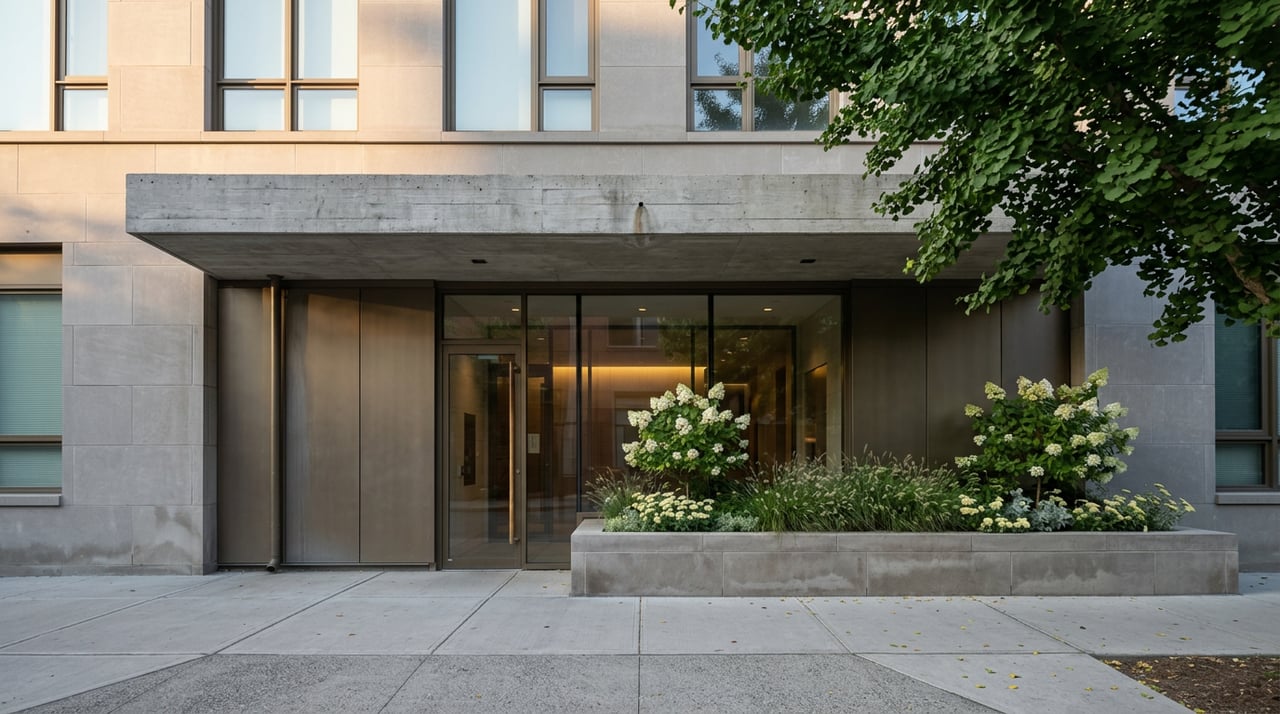
A buyer under contract on a Cherry Creek condo does something most people skip until it's too late: they actually read the resale certificate. Buried past the rules about pets and parking is a number that has nothing to do with the unit's finishes, its floor, or its view. It's the association's current insurance premium, what it was two years ago, and whether the board is already talking about a special assessment to cover the gap.
That single document is doing more to separate Cherry Creek condos right now than square footage or granite. Two units can list at the same price, in buildings a block apart, and carry meaningfully different total costs of ownership because one HOA renewed its master policy in a market that's tripled in some cases and the other hasn't yet.
The Line Item That Doesn't Show Up in the Listing Photos
Colorado's home insurance market has gone through one of the sharpest corrections in the country over the past few years. Premiums have roughly doubled statewide since 2020, with much of that increase concentrated in the past two to three years as carriers repriced for the state's hail exposure rather than the wildfire risk most buyers assume drives the number. Colorado sits in one of the most active hail corridors in the country, and multi-unit buildings with shared roofs, shared exteriors, and shared claims history absorb that risk collectively.
Condo association master policies have been hit even harder than single-family coverage. Some Colorado HOA master premiums have climbed between 200 and 500 percent over a short renewal cycle, and statewide data on condo association insurance specifically showed premiums roughly doubling, up 103 percent, in a single twelve-month stretch from June 2022 to June 2023. When a board's insurance line jumps that much at renewal, the money has to come from somewhere, and it almost always shows up as either a dues increase or a special assessment.
For a Cherry Creek buyer, this means the questions that actually matter now happen before you write an offer, not after you're already reading the fine print in your due diligence window.
Why This Is Landing Hard on Cherry Creek Buildings
Cherry Creek's condo stock spans boutique 1960s and 1970s conversions, mid-rise buildings from the 1980s and 1990s, and full-service towers with underground parking and concierge staff. That mix matters, because insurers price older construction and underground garages differently than newer concrete and steel builds. A building with an aging roof, dated electrical, or a large underground garage that needs waterproofing carries more risk on paper, and fewer carriers are willing to compete for that risk right now. Some associations that lost their prior carrier entirely have had to shop in a thinner market at renewal, and the resulting premium jump lands on every owner the same way regardless of which floor they're on.
This is also why the story isn't uniform across the neighborhood. A well-reserved building with a recent roof and updated systems might absorb a renewal increase without much drama. A building with a lean reserve fund and deferred maintenance can go from a modest dues bump to a five-figure special assessment in the same cycle, purely because the insurance conversation forced the board to confront problems it had been putting off.
What the Math Actually Looks Like
Across Cherry Creek, HOA dues already vary by building type: boutique townhome associations often run in the $200 to $600 monthly range, mid-rise buildings tend to sit between $350 and $800, and full-service luxury towers commonly run $700 to $1,500 or more depending on staffing and amenities. Those ranges reflect what a building costs to run in a normal year. They don't yet fully reflect what several consecutive insurance renewals have done to some of these budgets.
A condo with a $400 monthly HOA fee in 2022 that has now gone through two or three renewal cycles can easily be paying $550 to $700 or more today, with no change to the building's amenities or services. That's not a hypothetical. It's the shape of what's happening across older Denver-metro associations as insurance premiums work their way into annual budgets rather than staying a one-time shock, and it's exactly why the insurance renewal date on a Cherry Creek building you're touring matters as much as the year it was built.
A Building-by-Building Story, Not a Neighborhood-Wide One
This is where a Cherry Creek search benefits from knowing specific buildings rather than a neighborhood average. Cherry Creek Towers, the mid-century mid-rise near the shopping district, and newer product like North Creek Residences or the units at 250 Columbine sit at different points on the insurance risk curve simply because of when and how they were built. The Laurel, where a penthouse sold for $10.1 million in October 2025, represents the newer-construction end of the spectrum, where updated systems and modern building envelopes tend to price more favorably with carriers even in a hard market. Cherry Creek West, part of the district's ongoing redevelopment, adds another data point on how new supply is entering at a different insurance baseline than the neighborhood's older stock.
None of this means older buildings are a bad buy. It means the reserve study and the insurance renewal history matter as much as the unit itself, because they tell you whether you're buying into a board that's already absorbed the hard news or one that's about to.
The Documents That Tell You More Than the List Price
Colorado's Common Interest Ownership Act requires associations to provide a standardized resale disclosure package before closing, and that packet is where the real comparison happens. Before you get too attached to a unit, ask for and actually read:
- The current reserve study and its percent-funded figure, ideally completed within the last one to three years.
- The master insurance policy declarations, including the deductible and when the policy last renewed.
- Board meeting minutes from the past twelve to twenty-four months, which usually mention insurance renewal discussions before a dues increase becomes official.
- A list of any special assessments in the past five years and anything currently under discussion.
- The delinquency report, since a building with a high percentage of owners behind on dues has less room to absorb a bad insurance year without another assessment.
Your own HO-6 policy deserves a second look too. Standard loss assessment coverage on many policies caps out around $1,000 to $2,000, which doesn't go far if your association passes through a five-figure insurance-related assessment. Raising that limit typically costs very little and is worth discussing with your insurance agent before you're the one writing the check.
What This Means If You're Weighing a Condo Against a Townhome or Single-Family Home
Part of why single-family homes have held value more steadily than condos in the current Denver market comes down to control. A single-family owner shops their own carrier, can update their own roof on their own timeline, and manages their own risk profile. A condo owner inherits the building's collective insurance decisions, for better or worse. That's not a reason to avoid condo ownership in Cherry Creek, where lock-and-leave convenience and walkability to the shopping district remain real advantages. It's a reason to treat the building's financial health as seriously as its address.
A Few Questions Worth Asking Before You Write an Offer
Does a high HOA fee always mean a poorly run building? Not necessarily. A higher fee that reflects a well-funded reserve and a recent insurance renewal can be a better sign than a lower fee sitting on top of deferred maintenance and an underfunded reserve.
Can insurance issues affect my financing? Yes. Lenders review a building's insurance certificate and reserve documentation as part of project eligibility, particularly for conventional loans. A building with a lapsed or non-renewed master policy can complicate or delay a closing.
Is this only a concern for older buildings? Newer construction generally prices better with insurers, but no Cherry Creek building is fully insulated from a market where premiums are being repriced statewide. The reserve study and renewal history still matter regardless of the building's age.
If you're comparing specific Cherry Creek buildings and want a read on how a particular association's financials stack up before you fall in love with a unit, that's exactly the kind of groundwork worth doing early. Nick Bruce can walk through the reserve study, the insurance history, and the building-level details that the list price alone won't tell you. Schedule a consultation before you write the offer, not after.